Home | Looking for something? Sign In | New here? Sign Up | Log out
Showing posts with label Review. Show all posts

Saturday, July 5, 2014

Car that runs on air: Peugeot 2008 Hybrid Air prototype review

Peugeot 2008 Hybrid Air prototype review


The Peugeot 2008 Hybrid Air prototype is the first fully-functioning showcase for PSA’s compressed air hybrid technology. It’s the French answer to BMW’s electric iCars, and Audi’s plug-in hybrid e-tron range, and makes a small crossover like the 2008 capable of an impressive 97.4mpg and 69g/km, without the need for a heavy and expensive battery pack.


Central to the HYbrid Air's powertrain is a compressed air tank, entirely self contained, which can hold 20 litres of nitrogen and oil at a pressure of 220 bar. By discharging this tank and forcing the oil through a hydraulically actuated motor which spins the front wheels.
• Most economical cars 
Why go to all that trouble? PSA ultimate target is to make a 2.0l/100km (141mpg) car a realistic and affordable showroom possibility, and reduce average CO2 emissions for its entire range to 116g/km by 2015 – and this Hybrid Air technology is seen as a crucial way to achieving that.
Our test drive took place right in the heart of Paris behind the wheel of a 2008, but whether the system makes it to production in this model or a Citroen C3 (the model in which the technology was first shown) is yet to be decided. Emerging into the French capital's notoriously anarchic hustle and bustle, the automatic test mule crossover glides serenely in the zero emissions mode offered by air-only power. As per any hybrid car you’ve driven, the system works in purely electric mode until either the ‘charge’ (or in this case, air) is depleted, or when more acceleration is demanded.

Peugeot 2008 Hybrid Air cutaway 2
The Hybrid Air system can operate in zero emissions air mode, petrol-engine-only mode, or petrol and air in combination. Driven carefully, it takes about 500 metres for the tech to exhaust itself around town, and the 81bhp 1.2-litre turbocharged three-cylinder petrol engine kicks in with a gruff low growl to help push things along. It's a momentary boost, as fully recharging takes no more than ten seconds at city speeds, and despite the apparently short range the centre display still claimed 60 per cent of our journey was emissions free.
The recharging is done by a ‘hydronic’ pump that recirculates oil back into the main tank, not just when the petrol engine is on, but when you come off the throttle and hit the brakes, too. In that respect it’s similar to a battery hybrid’s regenerative braking system.

Peugeot 2008 Hybrid Air screen
Threading the car down narrow Parisian streets and wide main roads exposes a few flaws though: It’s sluggish off the line compared to an EV hybrid, and there's lack of power assistance to the steering, which feels heavy at lower speeds, although that’s something PSA’s engineers can work on recalibrating.  
It’s also tricky to stay in zero emission mode as even small squeezes of the throttle cause the engine to fire up, a result of the longer gearing designed to keep emissions down. This 2008's prototype status has to be taken into account, and the congested city streets meant we couldn’t use all of the claimed 121bhp and 200Nm of torque, but even so – boosting the performance is an area that needs improvement.
At the moment, comfort is the name of the game and the powertrain at its best when cruising. The ride was suitably refined, too, soaking up the Parisian cobbles and bumps with minimal fuss. It helps that the compressed air set-up is lighter than the equivalent battery-powered hybrid technology, and Peugeot-Citroen's efficiency drive is backed up by a more environmentally-friendly manufacturing and recycling process.

Peugeot 2008 Hybrid Air interior

On the road running costs obviously benefit as well, with a claimed 97.4mpg average whilst emitting just 69g/km. In comparison, a regular Peugeot 2008 1.2 automatic manages 65.7mpg and 99g/km.
Best of all though, engineers claim it's cheaper to produce, and therefore hope to pass these savings on to customers. A production model is a few years away yet, but when it does arrive expect a similar price mark up over standard petrol models as for an automatic diesel variant. If it makes it's way to the recently launched C4 Cactus then, prices could start from around £17,000.

At a glance

Price: from £17,000 (est)
Engine: 1.2-litre 3cyl turbo, plus hydraulic motor
Power/torque: 121bhp/200Nm
Transmission: Planetary gearbox, front-wheel drive
0-62mph: N/A
Top speed: N/A
Economy: 97.4mpg
CO2: 69g/km
On sale: 2017

Tuesday, June 17, 2014

Samsung Galaxy S5 Mini release date, news and rumours

Samsung-Galaxy-S5
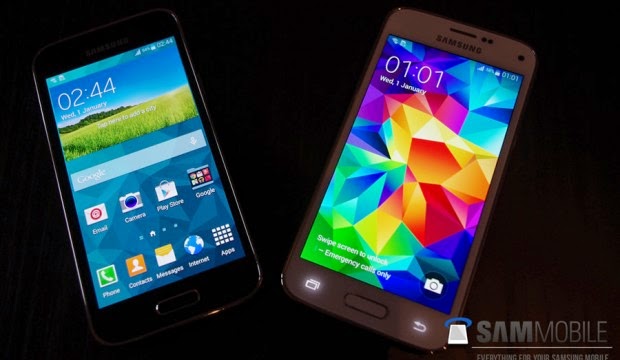
The Samsung Galaxy S5 is a great phone, but it’s also big and expensive, so a smaller, cheaper alternative could certainly find itself some fans.

Sadly we’re still waiting for one, but there were shrunk down versions of the last two Samsung flagships so we’re pretty confident that a pint sized version of the S5 will turn up sooner or later. While nothing’s been confirmed we’re also starting to get a picture of what we might be in store for, so pull up a chair and read on for all the news and rumours regarding the Samsung Galaxy S5 Mini.

Release date and price


The Samsung Galaxy S5 Mini could be touching down very soon indeed. The S4 Mini arrived at the end of June last year and most internet speculation is currently pegging the end of June as the likely date for the S5 Mini too.

There’s little to go on for pricing, but the S4 Mini launched at around £350 so there’s a fair chance the S5 Mini will follow suit.

Display


We’ve seen a user profile for a device believed to be the Galaxy S5 Mini and it was listed as having a 1280 x 720 display, which unfortunately would mean it’s not full HD, but it would be an improvement on the 960 x 540 Samsung Galaxy S4 Mini.

The actual size of the S5 Mini’s screen is likely to be 4.5 inches, as several rumours have pointed in that direction, most recently SamMobile received a whole heap of information about the handset from an anonymous tipster, and among the details was the fact that the device will have a 4.5 inch 720p screen.

That would make it marginally bigger than the 4.3 inch Galaxy S4 Mini but still a lot smaller than the full fat Galaxy S5.

Design


The Galaxy S5 Mini looks to have a very similar design to its larger sibling, right down to a mottled back, if images received by SamMobile are anything to go by. The same source also claims that the handset will be IP67 certified dust and water resistant and that the back cover will be removable.

Power


One area where the Galaxy S5 Mini may differ substantially from the Galaxy S5 is in its power, but there’s conflicting information here. A user agent profile revealed a Snapdragon processor running at 2.3GHz, but Sam Mobile reports that it will have a 1.4GHz quad-core Exynos 3470 processor alongside 1.5GB of RAM, so it remains to be seen what we’ll actually get, but the latter of those two seems more likely as we’d expect it to be downgraded from what the Galaxy S5 has.

Camera


Current rumours point to an 8 megapixel main camera and a 2.1 megapixel front facing one, both of which can shoot video in 1080p. On paper that would make it the same as the Galaxy S4 Mini’s camera if true, though it’s entirely possible that other improvements have been made.

Features


According to SamMobile the Galaxy S4 Mini will have a fingerprint scanner and heart rate monitor just like the more expensive Galaxy S5. It’s also thought to support Bluetooth 4.0 and NFC, have 16GB of built in storage, a microSD card slot, run Android 4.4.2 KitKat and share many software features with its big brother, such as Ultra Power Saving Mode.

If all of this comes to pass then the Galaxy S5 Mini could be a far more compelling handset than its predecessor, with some solid specs and a number of high end features. If it really is going to be announced at the end of the month then we should soon know whether or not these rumours are true.

Tuesday, June 10, 2014

Lamborghini's Aventador Roadster reviewed

Lamborghini-Aventador-Roadster
The Roadster version looks even more special, with its slender-spoked alloy wheels and complex glass engine cover. In my eyes, it’s easily the best-looking car you can buy today; a show-stopper in white. Yes, lots of sportscars can turn a few heads. But the Roadster, with its dramatic, jet fighter design, can summon a fanatical mob seemingly out of thin air. Hence, spending a day in Bangalore with the car would have been as easy as Katrina Kaif spending a day shopping on MG Road.


But yet here I am, and first things first: off comes the roof; I’m not about to drive one of the most exotic convertibles on the planet with a roof over my head. But unlike most convertibles, this isn’t some push-button, fold-on-the-fly electric roof. No, the carmaker, in typical Italian fashion, prefers style over function, and a folding roof would have compromised the car’s beautiful silhouette and that gorgeous engine cover.
So instead, you get a pair of forged composite roof panels that can be removed. It’s a bit of a tedious task – fold the seatbacks forward, pull the latches to release the panels, lift them out, and slot them into the boot. But at least they’re extremely light.
I lower myself into the cockpit, close the scissor door and am greeted by a familiar dashboard – it’s the same as the coupé and it’s still every bit as amazing.
It wouldn’t be a Lambo without a low-slung driving position, a steeply raked windscreen and acres of leather and carbonfibre inside.
This version ticks all of these boxes, and with some flair, but then this Italian manufacturer is owned by Audi, so along with that comes Germanic quality and decent ergonomics.
You’ll also spot a few parts borrowed from various Audi models, but the way Lamborghini has managed to blend these and the media interface in without hampering the visual drama makes this cabin – or rather cockpit – very special.
The German connection also means the air-con works well and you get a reversing camera; handy, because you can’t see very much past that exquisite engine cover behind you that hosts the same earth-moving 691bhp, 6.5-litre V12 as the coupé.
Given the increasing shift towards fuel-efficient, direct-injection, turbo engines, there’s something charmingly stubborn about an old-school, naturally aspirated V12 that loves to rev till your ears hurt.
I prod the start button and the engine comes to life with a loud growl. On this open stretch of tarmac, the grin won’t leave my face, and the way this Lambo accelerates is a new experience altogether.
Yes, I’ve driven the coupé, and it’s supposed to be slightly quicker since it’s 50kg lighter. But hearing that fantastic V12 clearly with the roof off just intensifies the experience; it feels like it’s packing another 100bhp. If you’d rather keep the roof up, you can still open the rear glass to hear that twelve-cylinder symphony.
It spears towards the horizon with a pace and ferocity that few other cars on the planet can compete with. In Sport mode, the acceleration is terrific, and if that isn’t enough, in full-power Corsa mode, the car transforms completely. It kicks you hard in the back every time you upshift near its 8,500rpm redline, so much so that you run the very real risk of neck injury from whiplash.
The complex four-wheel-drive system and the aggressive launch control allow this 1,625kg car to go from nought to 100kph in 3.0sec, hurtling you onward to a top speed of 349kph – without a roof!
Time to show this low, pointy nose the heart of Bangalore city – but perhaps I should have waited till the streets emptied out.
As soon as I encounter the slightest congestion, it’s clear that this Lambo is happy only when it’s going fast. The gearbox, which is lightning-quick at speed, feels jerky when you’re going slow, and the single clutch is not at all smooth when it bites. In any setting, the car is cumbersome to park, because it is next to impossible to creep. With some practice, I’m able to drive it smoothly, but it requires concentration and is, frankly, exhausting.
Then there’s the ride – skateboard-stiff and outright uncomfortable on the lumpy, potholed roads of Bangalore. The car also tends to overheat, and I’m fast regretting bringing it to the city.
So here’s a piece of advice to those who might actually buy this outrageous machine: spend a few lakhs more and get a flatbed truck to transport this rare piece of cattle to your favourite open road.
Owning such an outrageous car also means you draw a lot of attention, and at a traffic light, you end up getting mobbed. It’s fun to begin with, but when you start causing traffic jams and bikers come perilously close to the car, camera phones in hand, the excitement turns to horror pretty quickly. You can’t escape the spotlight, especially since that would mean getting out and re-assembling the roof, panel by panel.
At Rs. 5.46 crore (ex-showroom, Delhi), this Lambo doesn’t make any sense at all, but for a few passionate (and very rich) customers, that’s exactly what makes it so special.

Tuesday, June 3, 2014

iOS 8 vs iOS 7

APPLE UNVEILED iOS 8 during its Worldwide Developer Conference (WWDC) on Monday, and while it isn't a drastic overhaul like iOS 7 it will bring lots of new features to the iPhone and iPad.
We've stacked up iOS 8 against last year's release to see what features you can expect.
Notifications
Apple has made some fairly major tweaks to Notification Center, a feature which was first introduced in iOS 7, and therefore somewhat limited.
Chief among these tweaks is the addition of interactive notifications, a feature which lets you reply to messages or "Like" a Facebook post, for example, without having to leave the app you're already in.
Notification Center has also been beefed up with widgets. No, hell hasn't frozen over - Apple has in fact introduced Android-style widgets, which developers can start building to appear in the drop-down menu. Apple's Craig Federighi showed off an eBay app that's already available, which will allow users to bid on items from the notifications screen.
Compare this to iOS 7 and Apple's tweaks will be welcomed by most, with the feature presently limited to viewing notifications and tapping to jump into apps.
Messaging
Apple's most interesting iOS 8 updates arguably relate to messaging, with the firm introducing a number of new features.

First off, Apple introduced Quicktype, a feature that could signal the end of Autocorrect. This is a smart word-prediction service, which Apple claims will quickly learn how you talk and what words you're likely to type next, depending on who you're talking to. Support for third-party keyboards was also announced, which means iPhone users can soon opt to replace Apple's proprietary offering with Swiftkey, for example.
Apple also announced that with iOS 8, users will be able to use Do Not Disturb on specific group iMessage conversations, in order to silence frustrating notifications. The firm has also introduced a Snapchat-style Destruct feature, allowing users to send images, videos or audio messages that will be automatically deleted, unless a user has specified otherwise.
These features likely will be welcomed by current users of iOS 7, although the firm has been criticised for "ripping off" features from Snapchat and Whatsapp.
Siri
Apple's voice-activated digital assistant, Siri, will see a fairly major update in iOS 8. Mimicking Google Now, users will be able to say "Hey, Siri" to activate the feature, which will soon be capable of recognising songs (thanks to Shazam) and will be able to recognise streaming voice recognition.
Healthkit and HomekitiOS 7 didn't introduce many new apps from Apple, with the firm instead focused on touting its redesign. iOS 8, however, sees the arrival of Healthkit and Homekit, which sees Apple looking to challenge the likes of Samsung while making its mark in the Internet of Things (IoT).
Healtkit is similar to Samsung's S Health feature, allowing users to track data such as the number of steps walked, calories burned and so on. Unlike the app found on the Galaxy S5, however, Apple's Healthkit app supports third-party apps, including Nike+.
Homekit is Apple's rumoured smart home application, allowing users to easily control internet-connected devices, such as Philips Hue lightbulbs, from their iPhone or iPad.
Next: Camera, Mac continuity, enterprise.

Monday, November 4, 2013

Sony RX100 is the best point-and-shoot camera

Hello everyone, My name is Dilshan and today we're going to talk about sony's latest released Sony RX100

If you're not quite looking for the power of a professional camera but you appreciate the benefits of taking quality photos, Sony's RX100 is the perfect choice. That's why we're going to talk about it.

At its best -- which is to say any well-lit environment -- the RX100's photos can be indistinguishable from a DSLR, requiring an expert eye to see how a more expensive camera is superior.
And the RX100 delivers great results with minimal effort. When set to "auto" the lens is almost always quick to focus. Shots are sharp, vibrant, and overall pleasing to the eye.
For those desiring a little more control over their shots, the programmable ring around the lens, along with full manual control, will let you experiment to your heart's content.
The RX100 lets you record video too. It's more of a secondary feature, but in the right hands and using right setting, movies shot using the RX100 can impress too.
The camera's design is also a winner. Constructed almost entirely of aluminum, the black case has a simple, classic design that pays homage to old-school cameras while still looking like a 21st century device. It is solidly constructed, but not clunky, and every button, knob and dial exudes quality.
But the $600 camera comes with plenty of compromises. You're stuck with the 28-100mm fixed lens. In lower light, image quality starts to drop off faster than it should, especially when you use the zoom function. It's not quite as pocketable as most of its point-and-shoot counterparts, nor does the battery last quite as long. And the price tag will certainly scare a few people away (though you can easily find it for $500).
There's also the $750 RX100 MKII to consider, which features the same lens, a hotshoe for adding accessories and also has a big one-inch sensor. It also adds a few light absorbing tricks to that sensor to markedly improve its low-light performance.
If you're not quite a hobbyist, but you're in the market for a camera that is noticeably better than your phone, the RX100 is the camera to spring for.

Saturday, November 2, 2013

Sony SmartWatch 2 SW2 review


Does a more advanced smartwatch make for a better smartwatch? Sony's original SmartWatch last year didn't get too many people excited, but with the Samsung Galaxy Gear hitting the shelves and Apple's long-rumoured iWatch getting closer, the time is clearly ripe to release an updated version to stay in the increasingly high-stakes smart watch game.

Today we're going to review the Sony SmartWatch 2.

Design
The SW2 is beautifully compact at an almost-square 42x41mm, and just 9mm thick. The body is made from black-painted aluminium, with reflective silver trim. It weighs 123 grams, which is less than my own metal-banded analogue watch.
Compactness is one of the best things the SW2 has going for it.
Most of the smartwatches we’ve seen to date are bulky, oversized affairs. That’s not automatically a bad thing – many people choose to wear huge watches, or ranges such as Casio’s G-Shock wouldn’t exist. However, large watches are a matter of preference – a fashion statement some watch-wearers would prefer to avoid. Personally I have tiny wrists, so the SW2 suits me perfectly as a ‘normal’ sized accessory.
The watch is rated IP57, dust- and water-resistant: if you get caught in the rain or fall into a pool, it’ll be fine – just don’t go swimming in it.
The SW2 is sold with one of three watchband styles: silicone rubber, which is available in yellow, cyan, purple, pink, or black; leather, available in brown or black; and metal. Unlike some competitors (Samsung Galaxy Gear, I’m looking at you), Sony’s smartwatch is compatible with any standard (spring-bar) 24mm watch band.
In New Zealand, only the black silicone-rubber strap, and metal strap, are available. Only the black silicone-rubber strap is currently available through the Sony Australia website, though we’re unsure what models may be available through other Australian retailers.
Software and features
It's supposed to be compatible with any smartphone that uses Android 4.0 or later, which immediately makes it a much more flexible device than the Gear, that's limited to a very small number of Samsung handsets.

Download Sony's Smart Connect app from Google Play, touch the NFC-enabled device to the SmartWatch and it will automatically hook up. Most of its apps don't come preinstalled, but you can individually download apps for reading (not initiating) calls, texts, emails, Facebook, Twitter and more. You can't actually take calls on the SmartWatch as there's no microphone or speaker, though you can answer calls and then talk via a Bluetooth headset. Notifications popped up promptly and texts and emails appeared clearly, automatically sized to fit the screen when the phone was pocketed.
There are presently over 140 apps available for the SmartWatch (much more than the Gear), though it's the usual mix of pretty goods and so-whats, including exercise apps, games, languages and remote controls. Some, like the very limited and glitchy map app, are free, but others, including WhatsApp Alerts, cost a fee.
Email notifications are supported, and we tested with Gmail and Microsoft accounts (although it's worth noting you can't reply to them on the device). Currently Microsoft Exchange and Hotmail/Outlook emails only work for notifications if paired with a Sony Xperia Z1, as Sony has adapted its implementation of Android to support it; other Android devices cannot support Microsoft's email technology currently. Some software is also dependent on being used with Sony-created software. The music playback controls, for example, only work with Sony's Android music player; playing, pausing and skipping Spotify is a no-go area. Disappointing.
The 1.6-inch screen is the same size as the Gear's but it offers a lower resolution of 220x176 pixels -- not great, but it's fine for viewing updates and notifications. The battery life is considerably better than Samsung's competitor: leave it on all the time and you should get three to four days out of it, extending to a week or so if you switch it off at night. 
Charging is via a standard microUSB slot hidden behind a rubber cover on the side. It powers up by pressing the outsize silver button on the side, which matches aesthetically with the power button on Sony's Xperia handsets.

Water resistance, battery life

The SmartWatch 2 has an IP57 water and dust resistance rating, meaning it can sit in one meter (3.3 ft.) of water for 30 minutes without going kaput. And indeed, we tested the smartwatch by dunking it in a glass of water, and saw no ill effects afterwards. In the realm of smartphones, Sony has taken water resistance more seriously than any other manufacturer, so we weren't surprised to see the company's smartwatch live up to that billing.
Sony advertises three to four days of battery life with typical use. Based on our testing, we'd say that's a solid estimate. It's nice not to have to charge every night, but you'll probably want to plug in its included microUSB cable once every two or three nights, just to be safe.
Hardware
The SmartWatch 2 isn't ridiculously thick or bulky. It has a depth of 9 mm. It feels fairly comfortable on the wrist, but, at least with the default band, we preferred the feel of both the Galaxy Gear and Pebble. The silicone strap version we tested (it's also sold with a stainless steel band) weighs 123 g (the watch face weighs 48 g), and we thought the strap looked and felt very cheap.
Even if you agree with us that the default silicone band feels subpar, there are options. That's because another feature the SW2 has in common with Pebble is that you can customize its band. If you want to go with something bolder like leather, bright colors, or, hell, 18k gold, then you can swap its default band for any standard 24 mm watch strap. There's also that variation with the metallic band, but we didn't test that version.


Technology News

Online Money

Review

Motor